Red Flags to Avoid When Choosing a Loan Provider
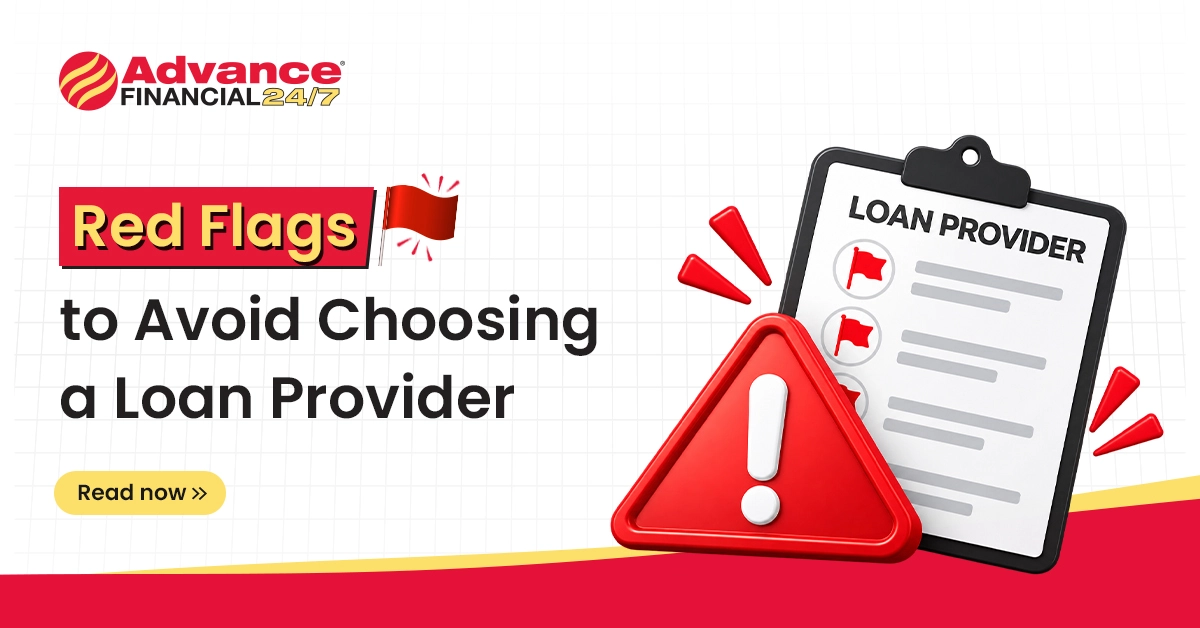
Finding a loan provider can feel urgent, especially when you are facing an unexpected expense. That urgency can make an appealing offer hard to resist—but it is also when slowing down matters most.
Dishonest companies and scammers often use professional websites, official-looking documents, and promises of fast money to gain a borrower’s trust. Recognizing the red flags when choosing a loan provider can help you protect your personal information, avoid losing money, and make a more informed borrowing decision.
When it comes to what to look for in an online lender, here are the most important warning signs to watch for and the steps you can take when choosing a safe loan provider.
1. The Provider Guarantees Approval Before Reviewing Your Application
Be cautious of statements such as:
- “Everyone is approved”
- “Guaranteed loan—no questions asked”
- “Your credit history does not matter”
- “Approval is certain if you apply today”
Legitimate providers generally need to review information about an applicant before making a firm offer. The process varies by lender and loan type, but it may include identity, income, employment, credit, or repayment-capacity checks.
A provider may accept applicants with a range of credit histories, but that is different from guaranteeing a loan before reviewing an application.
2. You Must Pay Money to “Unlock” the Loan
One of the biggest warning signs of fake loan providers is a demand for money before promised funds will be released. A scammer might call the payment a processing charge, security deposit, insurance premium, verification fee, or transfer tax.
Be especially suspicious if you are told to pay with something like a gift card, cryptocurrency, or a money order. These payment methods can be difficult to reverse. In an advance-fee scam, the promised loan may not exist at all.
Some legitimate loans can involve disclosed application, appraisal, origination, or other charges. The red flag is a surprise payment demanded in exchange for guaranteed approval or access to promised funds. A trustworthy provider explains legitimate costs clearly and does not pressure you to pay for a promise.
3. Rates, Fees, and Repayment Terms Are Missing or Unclear
Before accepting a loan, you should be able to review the important terms in writing. Depending on the product, those terms may include:
- The amount financed
- The annual percentage rate, or APR
- Finance charges and other fees
- The number and amount of payments
- Payment due dates
- The total amount you are expected to repay
- Late-payment or insufficient-funds charges
- Automatic payment terms, if applicable
If a representative avoids questions, changes the quoted terms, or tells you the details will be provided only after you accept, do not move forward. Verbal promises are not a substitute for reviewing the agreement.
Also look beyond the payment amount. A smaller payment may result from a longer repayment period and could increase the total cost. Compare both the scheduled payment and the full amount you may repay.
4. The Provider Cannot Be Verified
When learning how to spot unsafe lenders, begin by checking the company’s identity. A legitimate provider should make basic business information easy to find, including its name, physical address, customer-service number, and official website.
Then verify the company independently:
- Check with your state banking or financial-services regulator.
- Search the business through your state attorney general’s resources.
- Confirm that the company name, address, phone number, and website match official records.
- Check whether any required license or registration is active and applies where you live.
Requirements vary by state and loan type. Do not assume a professional-looking website or paid advertisement proves that a provider is legitimate. Always use caution when it comes to your loan data security
5. The Website or Message Imitates a Familiar Company
Scammers may copy logos, colors, names, or website layouts from legitimate businesses. They may also create a web address that differs from the real one by only a letter or punctuation mark.
Watch for things like misspelled company or domain names, unusual web addresses or an email sent from a free personal account
Do not use the contact details in a suspicious message to verify that same message. Find the company’s official website independently and contact it through the published phone number.
6. You Are Pressured to Act Immediately
High-pressure tactics are common in many loan scams to avoid. A scammer may claim that approval expires within minutes, funds will disappear unless you pay immediately, or a penalty will apply if you pause to review the agreement.
A legitimate provider should allow you to read the terms, ask questions, and decide whether the loan fits your needs. Urgency may be part of your situation, but it should not be used to prevent an informed choice.
If someone tries to keep you on the phone while you transfer money or discourages you from speaking with your bank or family, end the conversation.
7. The Provider Requests Information That Does Not Make Sense
A real loan application may require sensitive information to confirm your identity, assess eligibility, deliver funds, or arrange repayment. However, no legitimate provider needs your online banking password, debit card PIN, or one-time security code.
Pause if someone asks you to:
- Reveal a bank-account password
- Share a verification code sent to your phone
- Give remote access to your computer or mobile device
- Provide personal information through an unsecured messaging app
- Send photographs of payment cards showing all details
Before submitting legitimate application information, confirm that you are on the provider’s authentic website and review its privacy notice.
8. The Website Is Not Secure or Has No Privacy Information
Look closely at the website address before entering personal information. It should begin with https://, be spelled correctly, and display normally in your browser.
Remember that HTTPS only means the connection is encrypted. It does not prove the company itself is legitimate, because scam websites can also use encryption.
A reputable provider should also explain what information it collects, how that information is used, and whether it is shared with affiliates or third parties. If there is no privacy notice—or if the notice appears copied, incomplete, or unrelated to the company—consider that a warning sign.
9. You Cannot Tell Whether the Website Is a Lender or a Lead Generator
Some loan websites are not lenders. They collect applicant information and send or sell it to one or more participating companies. These businesses are commonly known as lead generators or matching services.
Look for language such as, “We connect you with lenders”, “Your application may be shared with our network” or “We are not a lender”.
Lead generation is not automatically a scam, but you should know who is collecting your data and how broadly it may be shared. Do not submit sensitive information until you understand the site’s role and privacy practices.
10. The Company Has Suspicious Reviews or Cannot Be Found Elsewhere
Search the provider’s name, phone number, and web address with terms such as “complaint,” “review,” “fraud,” or “scam.” Look for patterns rather than relying on a single comment.
Be cautious if:
- Nearly every review was posted within a short period
- Reviews use repetitive or unnatural language
- Customers consistently report unauthorized withdrawals or surprise charges
- The provider has little history outside its own website
- Search results show reports of impersonation
Online reviews can be manipulated and are not a substitute for regulatory verification. Use them as one part of a broader review.
What to Do If You Suspect a Loan Scam
Stop communicating with the suspected scammer and do not send more money or information. Save emails, texts, screenshots, account details, phone numbers, and receipts.
If you send money, contact the bank, card issuer, payment app, or transfer service immediately and ask whether the transaction can be stopped or disputed. If you shared account credentials, change them promptly using the institution’s official website or app.
Slow Down, Verify, and Read Before You Borrow
The clearest red flags when choosing a loan provider include guaranteed approval, surprise upfront payments, unclear terms, unverifiable credentials, requests for passwords or security codes, and pressure to act immediately.
When choosing a safe loan provider, verify the company through independent sources, compare the total cost of borrowing, read the agreement carefully, and make sure the payments fit your budget. A few extra minutes of research can help you avoid fake providers and make a more confident financial decision.
At Advance Financial, we believe borrowers should have clear information before deciding whether a loan is right for them. Always review the complete terms and consider your available options before borrowing.