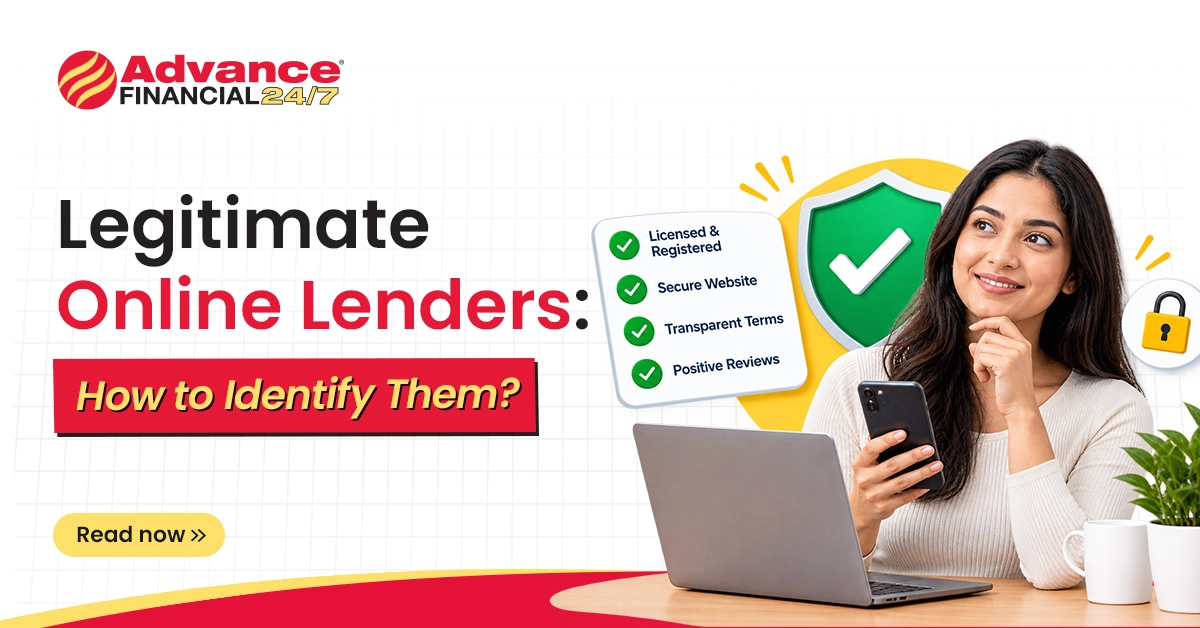
Legitimate Online Lenders: How to Identify Them
Applying for a loan online can be convenient. You can research options, submit information, and receive a decision without visiting a physical location. But that convenience also makes it important to know who is on the other side of the screen.
Scammers can create professional-looking websites, imitate real companies, and make offers that appear convincing. Before sharing your Social Security number, bank account details, or other personal information, take a few minutes to verify the company.
If you are wondering how to identify legitimate online lenders, start with the lender’s identity, licensing, disclosures, security practices, and application process. The following steps can help you separate trusted businesses from suspicious ones to ensure your personal information security.
1. Confirm the Company’s Identity and Contact Information
Legitimate lenders should make it easy to understand who they are and how to contact them. Look for the company’s full business name, physical mailing address, and a working customer-service phone number. These things can make sure you are using safe online loan lenders
Do not rely only on the contact information in an unsolicited text, email, or social media message. Scammers sometimes impersonate real businesses. Instead, type the lender’s web address into your browser or locate the company through an independent search, then compare the information.
Be cautious if the lender provides only a messaging-app account, refuses to share an address, or pressures you to communicate outside its official website.
2. Verify That the Lender Is Authorized to Operate in Your State
One of the strongest online lender verification steps is checking whether the company is permitted to offer the relevant type of loan where you live.
Licensing and registration requirements vary by state and by loan product. Start with your state’s banking or financial-services regulator. You may also contact your state attorney general.
When checking a license or registration:
- Search the regulator’s official website rather than following a link supplied by the lender.
- Match the lender’s name, address, website, and phone number to the official record.
- Confirm that the authorization is active and applies to your state.
A license alone does not guarantee that a particular loan is right for you, but an inability to verify the company is a serious warning sign.
3. Look for Clear Rates, Fees, and Repayment Terms
Trusted online lenders provide meaningful information about the cost and terms of a loan before you agree to borrow. Review the loan agreement carefully and look for:
- The amount financed
- The annual percentage rate, or APR
- Finance charges and other fees
- The payment amount and due dates
- The total amount you are expected to repay
- Late-payment or insufficient-funds fees
- Information about automatic withdrawals, if applicable
Do not proceed if the terms are missing, difficult to understand, or different from what you were previously told. Never sign an agreement with blank spaces, and save a copy of every disclosure and agreement for your records.
Also consider affordability, not just approval. A legitimate offer can still be expensive or unsuitable for your budget. Review the total cost and make sure the repayment schedule works with your income and other obligations.
4. Be Wary of Guaranteed Approval
Legitimate lenders generally review an application before making a firm credit offer. The review process may include confirming your identity, income, employment, credit history, or ability to repay, depending on the lender and product.
Claims such as “guaranteed approval,” “everyone qualifies,” or “no application review required” should make you pause—especially if they are paired with a demand for money.
Flexible eligibility standards are not the same as guaranteed approval. A real lender should explain that approval is subject to eligibility, verification, and applicable underwriting requirements.
5. Never Pay an Unusual Upfront Fee to “Unlock” a Loan
Wondering how to spot fake loan lenders? One of the clearest red flags is a demand to pay before promised loan funds can be released.
A scammer may call the payment things like a processing fee, insurance premium, security deposit or something else.
Be especially suspicious if payment must be made by gift card, cryptocurrency, wire transfer, cash-transfer app, or directly to an individual. These methods can be difficult to reverse.
Some legitimate credit products can involve disclosed application, appraisal, origination, or other fees. The critical distinction is that a reputable lender explains legitimate costs clearly; it does not guarantee approval in exchange for a surprise payment. If someone says a fee will secure your approval or release already-promised funds, stop and verify the company independently.
6. Inspect the Website’s Security and Privacy Information
Before entering sensitive data, confirm that the website address is spelled correctly and begins with https://. Most browsers also show a security indicator near the address bar.
HTTPS protects information while it travels between your browser and the website, but it does not prove that the business itself is trustworthy. Scam sites can also use encrypted connections. Treat website security as one checkpoint—not the entire verification process.
Review the lender’s privacy notice and look for an explanation of what information the company collects or why it collects that information. Be sure to find whether it shares information with affiliates or third parties, as well as choices you have about certain sharing, and how to contact the company with privacy concerns.
The CFPB also recommends determining whether a site is an actual lender or a lead generator. A lead generator may collect an application and share it with a network of businesses. Phrases such as “connect you with lenders” or “match you with participating lenders” may indicate that the site is not the lender itself.
7. Watch for Pressure, Threats, and Suspicious Communication
Safe online loan lenders give you time to review the terms and ask questions. Be cautious if someone says the offer will disappear unless you act immediately or pressures you to send money before reading an agreement. Be on the lookout if they ask you to give a password, or tell you to lie on an application.
Slow down when a message creates panic or urgency. Contact the lender using a phone number or website you located independently.
A Quick Online Lender Verification Checklist
Before submitting an application, ask yourself:
- Can I confirm the lender’s legal identity and contact information?
- Is the lender authorized to offer this product in my state?
- Does the website clearly explain whether it is a lender or a lead generator?
- Are the APR, fees, payment schedule, and total repayment amount disclosed?
- Did I receive time to review the agreement before accepting it?
- Is the company asking only for information reasonably related to the application?
- Does the website provide a privacy notice and use a secure connection?
- Can I verify the offer by contacting the company independently?
- Am I free from pressure to pay an unusual upfront fee or use a hard-to-reverse payment method?
If several answers are “no,” do not continue until you have resolved your concerns.
What to Do If You Suspect a Fake Lender
Stop communicating with the suspected scammer and do not send additional money or information. Save emails, texts, screenshots, payment receipts, and account details related to the interaction.
If you share financial information, contact your bank or card issuer promptly. Ask what steps may be available to protect your account or challenge a payment. Change affected passwords and avoid reusing the new password elsewhere.
Take Time to Verify Before You Apply
Knowing how to identify legitimate online lenders can help you protect your money and personal information. Confirm the company’s identity, check its status with your state, review all costs, understand how your information will be used, and walk away from pressure or promises that seem too good to be true.
At Advance Financial, we believe borrowers should have clear information before making a financial decision. Whatever lender you consider, take time to compare your options, read the full agreement, and make sure the repayment terms fit your budget.